Social

Vegetable gardens and internships at primary schools in South Africa

Many children in the communities of Mpumalanga Province in South Africa depend on the meals they get in primary schools and childcare centres. But climate change and high population density are threatening food security in the region. Now climate-resilient vegetable gardens have been estabished in schools, and the vegetables grown in these gardens are being used to prepare meals for school children. This creates a solid foundation for food supply.

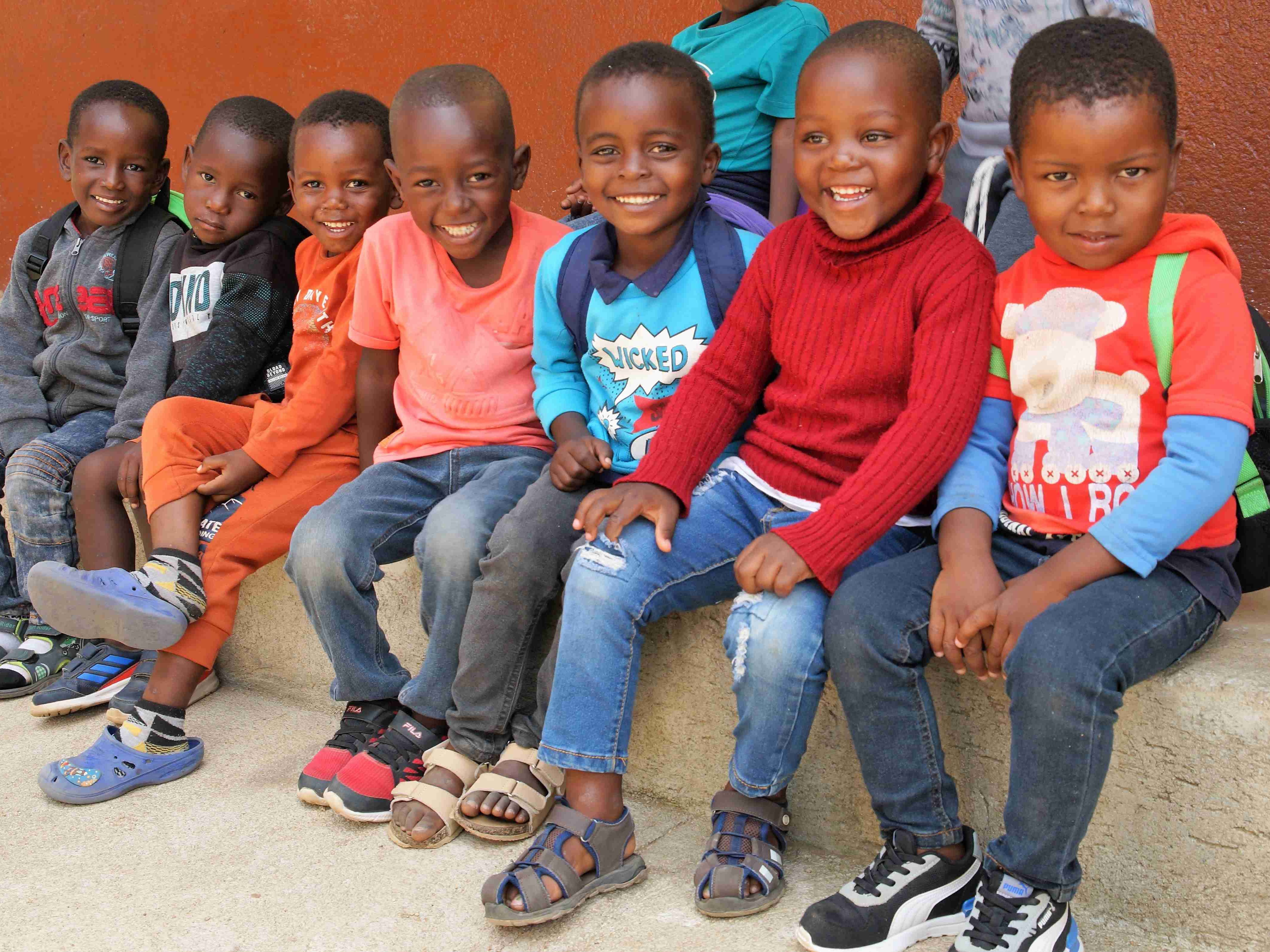
Kindergartenkinder der Gemeinde Welverdiend in Südafrika sitzen nebeneinander auf einer Bordsteinkante

In rural communities around Kruger National Park in Mpumalanga and the iSimangaliso Wetland Park in KwaZulu-Natal, many children rely on meals provided at schools and early childhood development centres. At the same time, water scarcity, recurring droughts and high unemployment pose significant challenges for local communities. Therefore, the Wilo-Foundation supports a project of the Global Nature Fund and its South African partner organisation Wild Impact that combines food security with career opportunities for young people.

The successful implementation of the pilot project has already demonstrated that climate-resilient school gardens can make a meaningful contribution to providing children with fresh food. Building on these positive results, the approach is now being expanded to additional educational institutions and communities.

Successful pilot project enters its next phase

Building on the success of the pilot project, demonstration gardens were established, cultivation methods were tested, and the approach was further developed together with local educational institutions. Based on these positive results, the project is now being significantly expanded: four new seedling production centres, together with three existing centres, will supply a total of 50 school gardens. 

The gardens enable schools and early childhood development centres to grow an increasing share of the vegetables used for their meals. At the same time, reliable water infrastructure helps adapt food production to challenging climate conditions. Young people gain hands-on experience in vegetable cultivation and seedling production while receiving training that prepares them for entering the labour market

School gardens for food security

The project supports a total of 50 existing and newly established gardens. Forty new institutions have been selected to participate, including 25 in the Greater iSimangaliso area and 15 in the Greater Kruger area. Together, these newly added educational institutions serve 741 children.

Today, more than 5,700 children benefit from the school gardens. At the same time, participating institutions have reduced their spending on purchased vegetables by an average of around 70 percent. In March 2026, Matikinya Primary School sold surplus vegetables from its garden and used the proceeds to purchase school uniforms for 32 children.

The long-term goal is for educational institutions to produce a significant share of the vegetables needed for their meals themselves. At the same time, the gardens and seedling centres serve as practical learning and working environments for young people.

Practical training and career opportunities for young people

The project also creates opportunities for young people through one-year internships in educational institutions. Based on South Africa’s YES4Youth model, the programme combines practical work experience with skills development to improve employment prospects in a country facing one of the world’s highest youth unemployment rates.

The first cohort of 58 young people has already begun its twelve-month qualification programme. Participants support activities in seedling centres and school gardens while being mentored by experienced professionals. Training covers sustainable agriculture, vegetable production, irrigation systems, digital skills, employability and workplace readiness.

Over the three-year project period, a total of 174 young people will be qualified. Their training includes soil preparation, the establishment of gardens and seedling centres, irrigation installation, seedling cultivation and transplanting, as well as the production of various vegetable crops. In addition, participants take part in YES4Youth training modules focused on employability, digital competencies and practical workplace skills.

In the next phase of the project, the newly established school gardens will be further strengthened, while the training of the first cohort of young participants continues. The long-term goal remains for participating educational institutions to produce at least 50% of the vegetables needed for their meals themselves.

Photo Header: Global Nature Fund - Internationale Stiftung für Umwelt und Natur, Radolfzell

Unser Förderpartner

Global Nature Fund - Internationale Stiftung für Umwelt und Natur, Radolfzell, ist eine gemeinnützige Stiftung und strebt eine nachhaltige globale Entwicklung innerhalb der planetarischen Grenzen für heutige und zukünftige Generationen an, welche die Gesundheit unseres Planeten sicherstellt und biologische Vielfalt als Basis unserer Lebensgrundlagen erhält und wiederherstellt.

Development Goals

The UN 2030 Agenda for Sustainable Development with its 17 Sustainable Development Goals (SDGs) forms the global framework for action for socially, economically and ecologically sustainable development. Our funding commitment also supports these sustainability goals. With this project, we are making a contribution to achieving the following SDGs:

What are the SDGs`?


SDG 1
SDG 2
SDG 3
SDG 4
SDG 5
SDG 6
SDG 7
SDG 8
SDG 9
SDG 10
SDG 11
SDG 12
SDG 13
SDG 14
SDG 15
SDG 16
SDG 17