Science

SPRING spatial planning Winter School in Chile

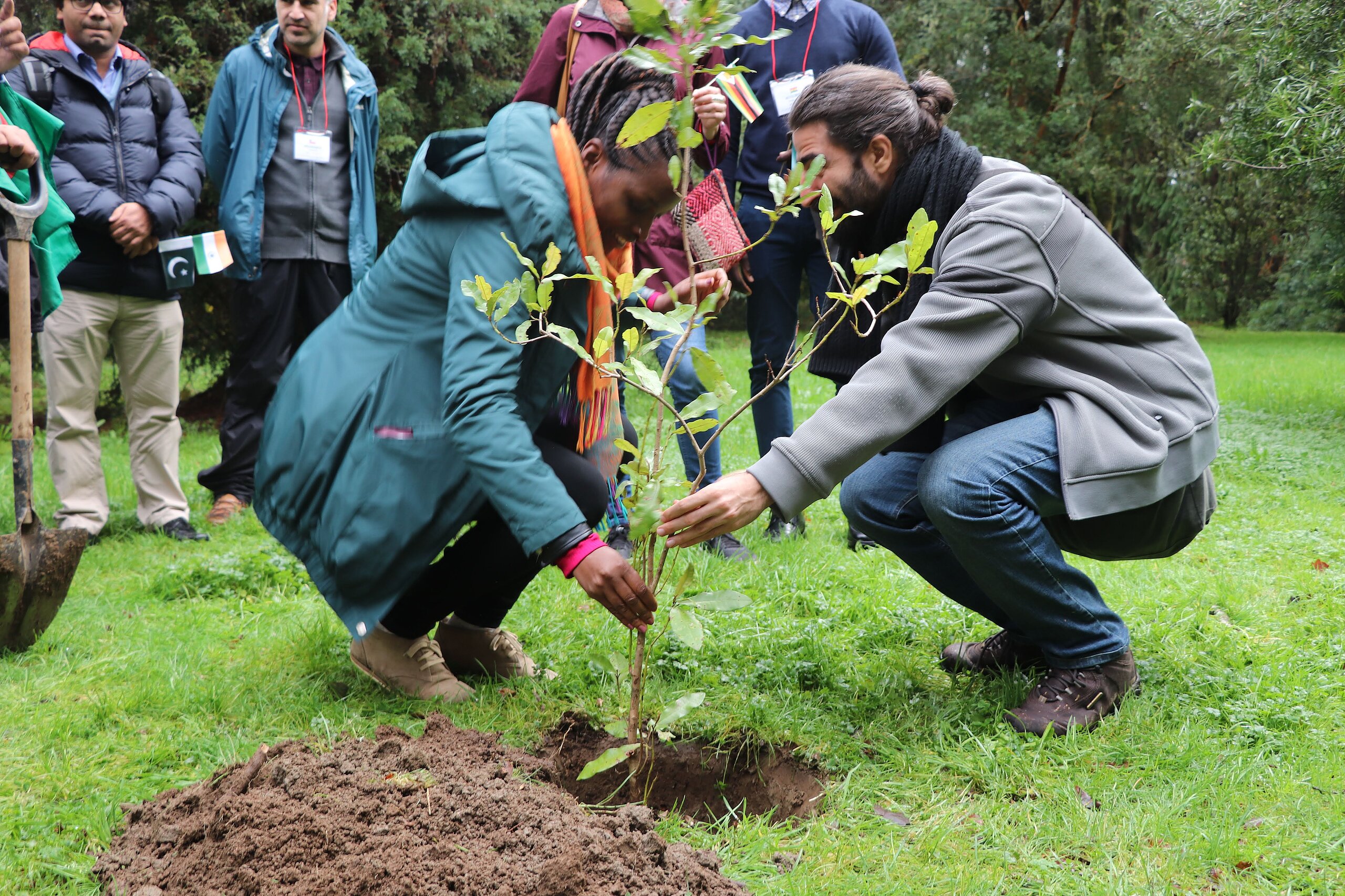
As part of the SPRING Winter School 2019 of TU Dortmund, international alumni students, professors, and experts gathered in Chile to exchange ideas on implementing the Sustainable Development Goals at the local level.

South America
Chile
Valdivia
Funding period: 2019

The two-year Master’s program “Spatial Planning for Regions in Growing Economies” (SPRING) at the Faculty of Spatial Planning at TU Dortmund deals with current issues of spatial planning in developing and emerging countries. The SPRING program combines the teaching of development theories and strategies, planning concepts and methods, as well as implementation and monitoring instruments, with practice-oriented field studies for the development of regional development plans and programs in Africa, Asia and Latin America.

In July 2019, the Wilo-Foundation, together with the DAAD (German Academic Exchange Service), supported an alumni initiative of this international SPRING Master’s program, the so-called “SPRING Winter School.” This took place in cooperation with SPRING alumni in Chile, members of the “SPRING International Association for Development Planners Latin America Community,” the Universidad Austral de Chile in the Chilean city of Valdivia, and other partners. The specialist event was aimed at development and spatial planners, DAAD alumni and scholarship holders, spatial planning academics from Germany, as well as international professionals and experts from Latin America.

During the five-day “SPRING Alumni Winter School 2019,” participants came together to exchange ideas on the topic “Regional Development Planning and the Sustainable Development Goals (SDGs) at the local level in Latin America and the Caribbean (LAC).” The focus was on the function and role of spatial planners within regional development planning and the implementation of the United Nations 2030 Agenda for Sustainable Development Goals at the local level.

Participants discussed, for example, the challenges of rapid urban growth, reflected on the conflict between environmental protection and economic development, developed concepts to improve transportation systems, or defined strategies to strengthen resilience regarding climate change.

Photo Header: Msilikale Msilanga

Unser Förderpartner

Alumni from Chile of the international SPRING Master’s program in Spatial Planning at the Technical University of Dortmund.

The Faculty of Spatial Planning at the Technical University of Dortmund is an interdisciplinary research and practice field, rooted in engineering and social sciences, that deals with the various demands of society on the built and unbuilt environment.

UN Sustainable Development Goals

The UN 2030 Agenda for Sustainable Development with its 17 Sustainable Development Goals (SDGs) forms the global framework for action for socially, economically and ecologically sustainable development. Our funding commitment also supports these sustainability goals. With this project, we are making a contribution to achieving the following SDGs:

What are the SDGs?


SDG 1
SDG 2
SDG 3
SDG 4
SDG 5
SDG 6
SDG 7
SDG 8
SDG 9
SDG 10
SDG 11
SDG 12
SDG 13
SDG 14
SDG 15
SDG 16
SDG 17

Latest news

No news available.