Science

SPRING master’s scholarships in spatial planning

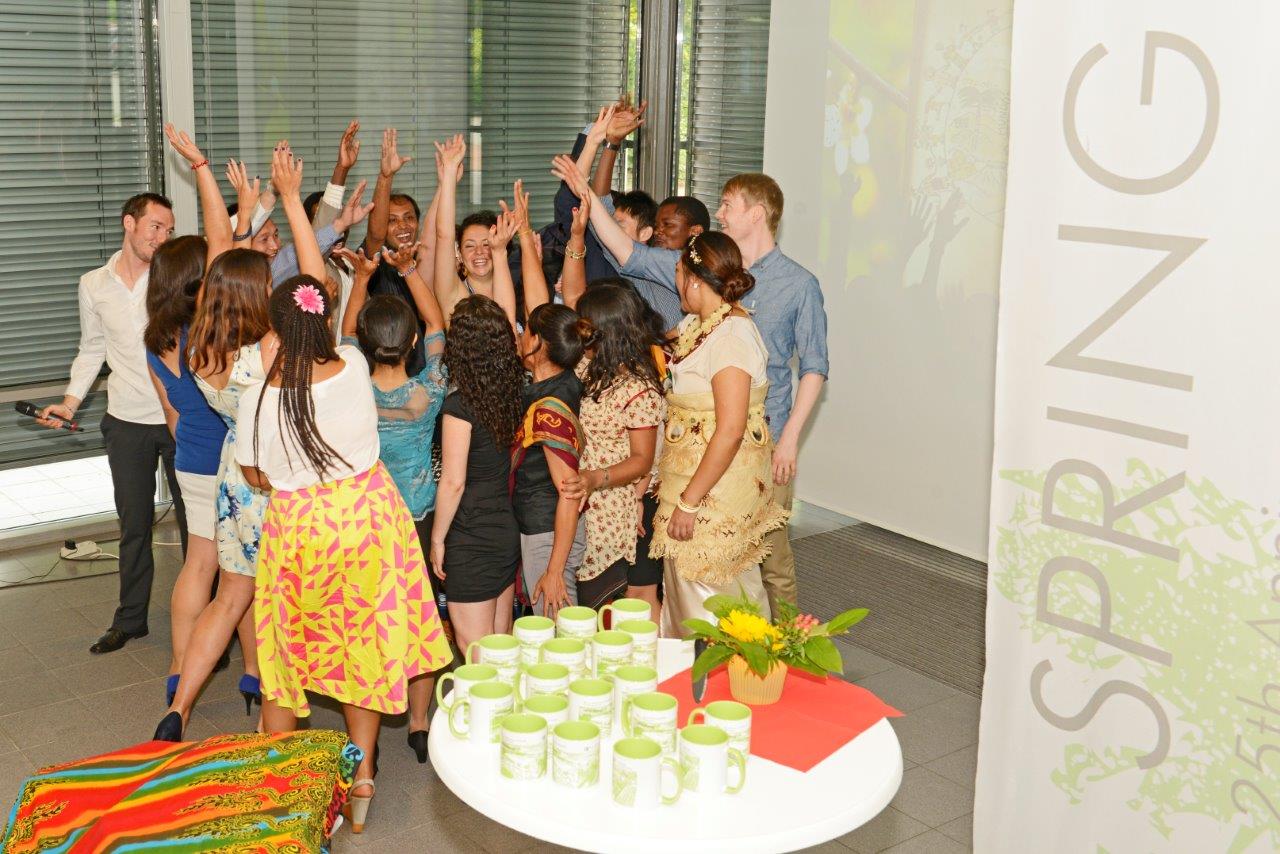
Through scholarships for international students from partner universities of TU Dortmund University in the Global South, the Wilo-Foundation supported international Master’s students in Spatial Planning from countries such as the Philippines, Ghana, Tanzania and Chile.

Africa, Asia, Europe, South America
Philippines, Ghana, Tanzania
Chile, Dortmund
Funding period: 2013-2016

SPRING stands for Spatial Planning for Regions in Growing Economies and deepens students’ knowledge in the fields of environmental planning, physical infrastructure planning and socio-economic development planning within the two-year master’s programme of the same name, which addresses current issues of spatial planning in developing and emerging countries. From 2013 to 2016, the Wilo-Foundation awarded full scholarships for this international master’s programme at the Faculty of Spatial Planning at TU Dortmund University.

Within their master’s studies, SPRING students acquire knowledge in spatial planning with a focus on environmental planning, physical infrastructure planning and socio-economic development planning. The first year of study is offered in Germany, while the second year is completed at one of the partner universities in Asia (Philippines), Africa (Ghana, Tanzania) or Latin America (Chile).

In seminars, SPRING students discuss, for example, the challenges of rapid urban growth, reflect on the conflict between environmental protection and economic development, develop concepts for improving transport systems and define strategies to address the impacts of climate change.

Our funding partner

Since its founding more than 55 years ago (1968), TU Dortmund University has developed a distinctive profile with 17 faculties in the natural and engineering sciences as well as the social and cultural sciences. The university has more than 32,400 students and around 6,600 staff members, including approximately 325 professors. Its range of programmes comprises around 80-degree courses, including both traditional and innovative subjects, several unique offerings and a broadly based teacher education programme for all types of schools.

The Faculty of Spatial Planning at TU Dortmund University is an interdisciplinary field of research and practice shaped by engineering and social sciences, dealing with society’s diverse demands on the built and unbuilt environment. The history of spatial planning as an independently institutionalized discipline began in Dortmund in 1968. Half a century after its founding, the Faculty of Spatial Planning at TU Dortmund is one of the largest planning schools in Europe and has for many years been the most research-intensive planning faculty in Germany.

UN Sustainable Development Goals

The UN 2030 Agenda for Sustainable Development with its 17 Sustainable Development Goals (SDGs) forms the global framework for action for socially, economically and ecologically sustainable development. Our funding commitment also supports these sustainability goals. With this project, we are making a contribution to achieving the following SDGs:

What are the SDGs?


SDG 1
SDG 2
SDG 3
SDG 4
SDG 5
SDG 6
SDG 7
SDG 8
SDG 9
SDG 10
SDG 11
SDG 12
SDG 13
SDG 14
SDG 15
SDG 16
SDG 17

Latest news

No news available.